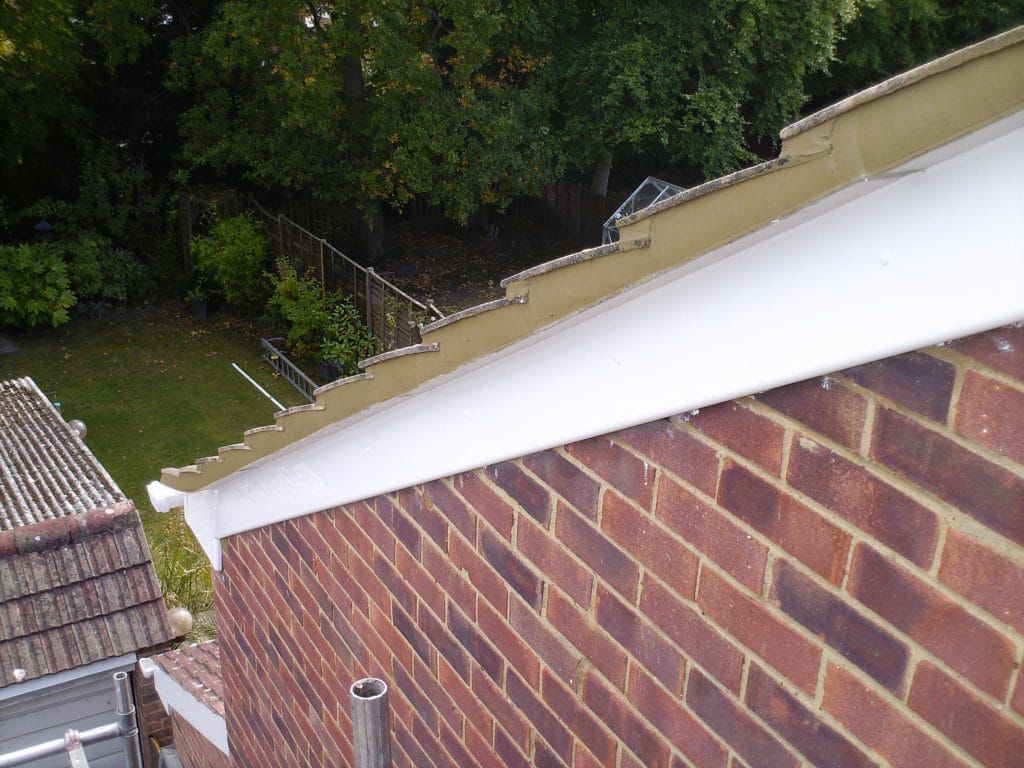
Sagging Runs
Substandard brackets give way over time, pulling joints apart between fixings and breaking the gradient that allows water to discharge cleanly.
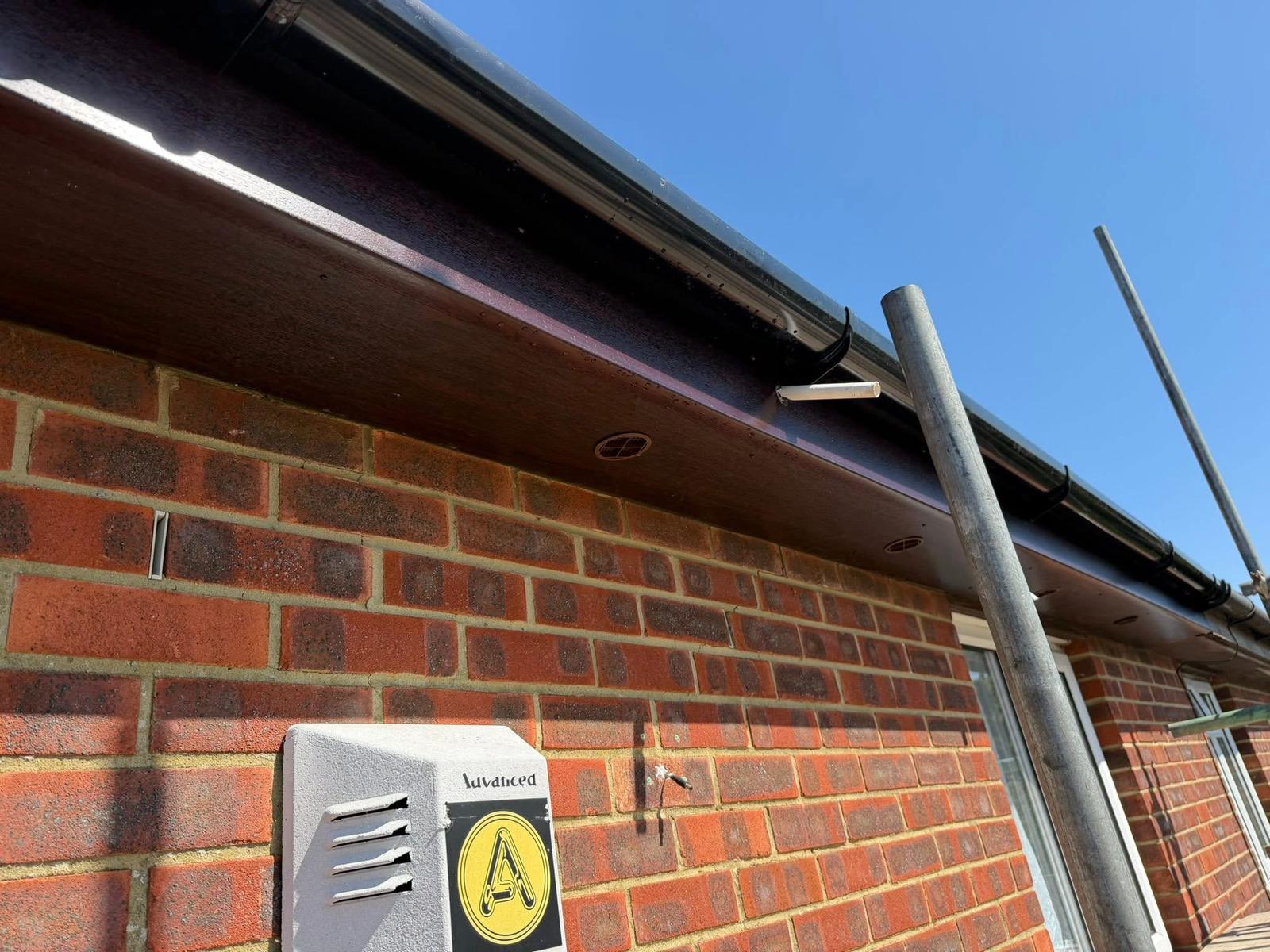
Half-round, square, ogee and deep-flow systems installed across East London, North London and Essex — on Victorian terraces, post-war housing and modern builds. The fix that stops the damp before it reaches your brickwork.
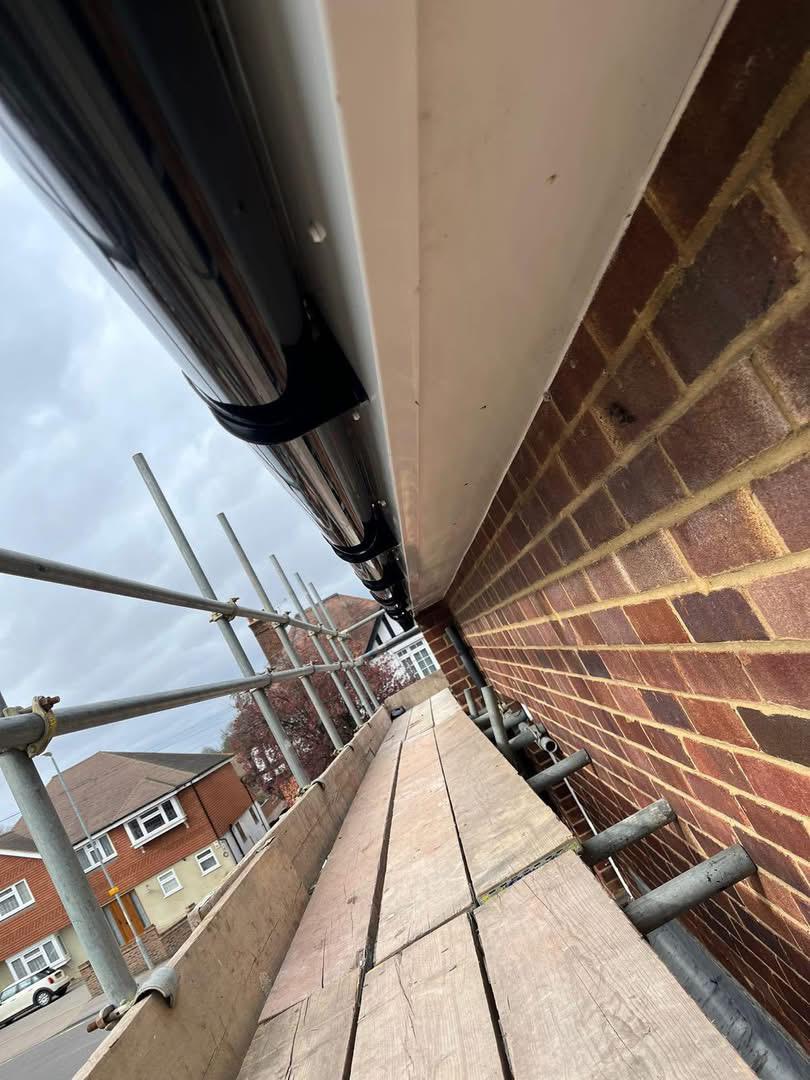
WHY FAILING GUTTERING MATTERS
By the time water is tracking down brickwork, splashing onto window heads or pooling at ground level, the damage to fascias, mortar joints and even foundations has often already started. Water that consistently overflows the gutter line saturates the underlying brickwork, leading to penetrating damp internally.
Persistent overflow against fascias and soffits accelerates timber rot, requiring the more expensive replacement of those components further down the line. At ground level, repeated splash damage erodes mortar joints and, in older properties without effective drainage, can contribute to localised foundation movement. Addressing the guttering early is consistently cheaper than addressing the downstream consequences later.
COMMON FAULTS WE ADDRESS
The capital’s housing stock places several specific demands on guttering systems — from cast iron well past its service life on Victorian terraces, to cheap UPVC fitted with substandard fixings on more recent builds. These are the faults we see most often.
Substandard brackets give way over time, pulling joints apart between fixings and breaking the gradient that allows water to discharge cleanly.
Failed seals at union brackets are the most common cause of overflow on an otherwise functional gutter — replacement of the rubbers resolves it.
Overhanging trees on streets across Walthamstow, Wanstead and surrounding boroughs deposit disproportionate leaf debris that blocks outlets.
Older UPVC exposed to decades of sunlight becomes brittle and splits, particularly on south-facing elevations and around fixing screws.
WHAT WE PROVIDE
From sectional repairs on otherwise sound systems through to complete strip-out and renewal — fitted to the correct fall, properly bracketed, with original-profile matching where it matters.
Complete strip-out and renewal of existing UPVC, cast iron or asbestos systems — including brackets, joints, downpipes and outlets. Available in half-round, square, ogee and deep-flow profiles, in white, black, brown, anthracite grey and other standard colours.

Targeted replacement of failed runs where the rest of the system is sound. Sectional UPVC makes this practical in most cases, with original-profile matching to maintain a consistent line along the roofline.
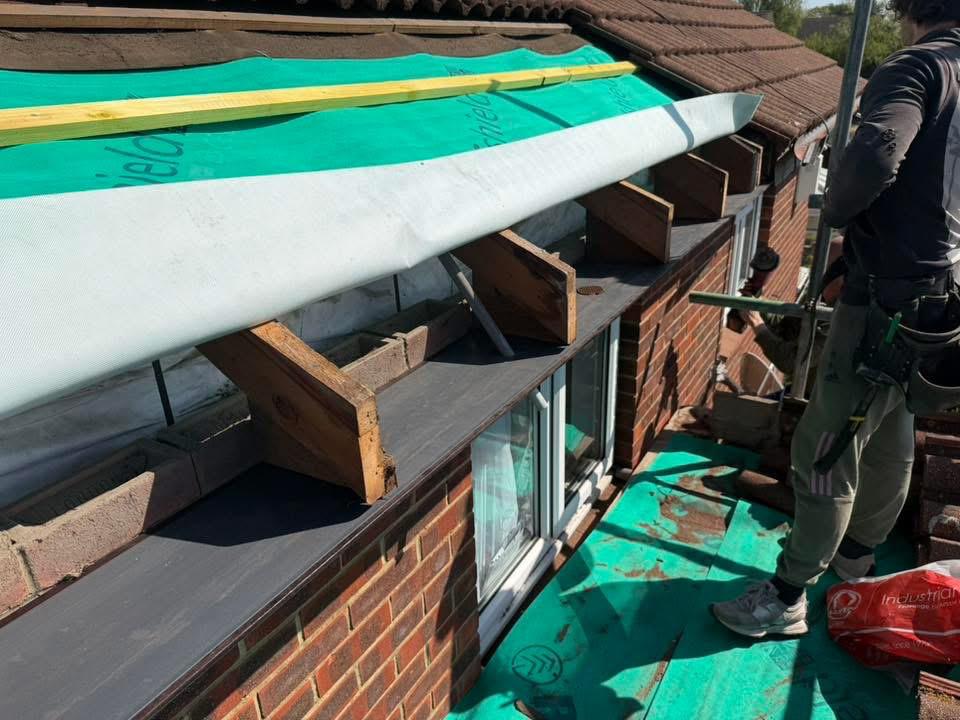
Failed seals at union brackets are the most common cause of overflow on functional guttering. Replacement of the union rubbers and rebedding of the joint resolves it without renewing the surrounding runs.
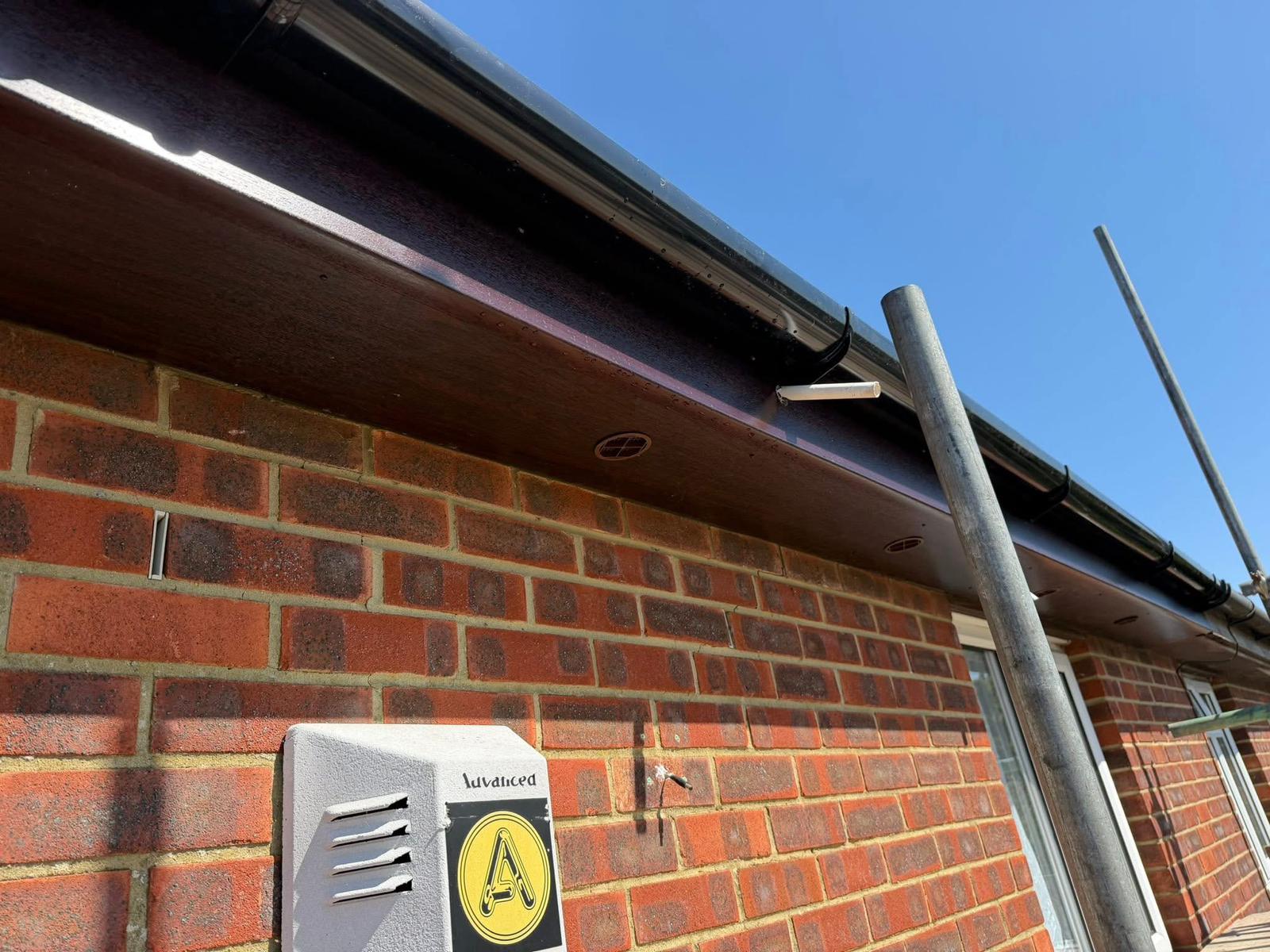
Cracked, displaced or undersized downpipes are renewed in appropriately sized UPVC and properly bracketed to the wall. The connection at ground level — into either an existing gulley or a soakaway — is checked and reinstated as part of the works.
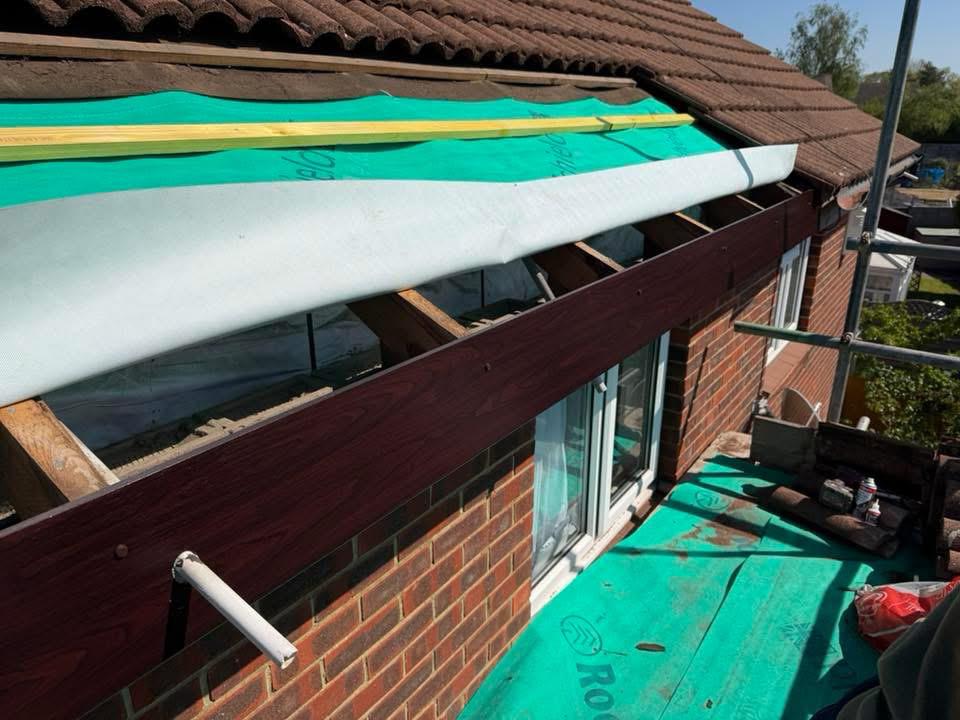
A gutter without a consistent fall to the downpipe outlet will hold standing water, sag over time and eventually fail at the brackets. Realignment involves removing the runs, resetting brackets at the correct gradient, and refitting the system to discharge cleanly.
Replacement of failed outlets, hopper heads and balcony drains — including bespoke fit-out where modern UPVC is being adapted to an older masonry detail.
Installations sized and fitted in line with BS EN 12056-3 — the recognised British Standard for gravity drainage systems on the outside of buildings, covering gutter capacity and discharge to downpipes.
Most domestic gutter replacements are completed in one to two working days. Existing materials are removed and disposed of responsibly, with discharge tested on completion.
A clear four-stage process from inspection through to sign-off — designed so you know exactly what’s being done, in what order, and at what price before any work begins.
01
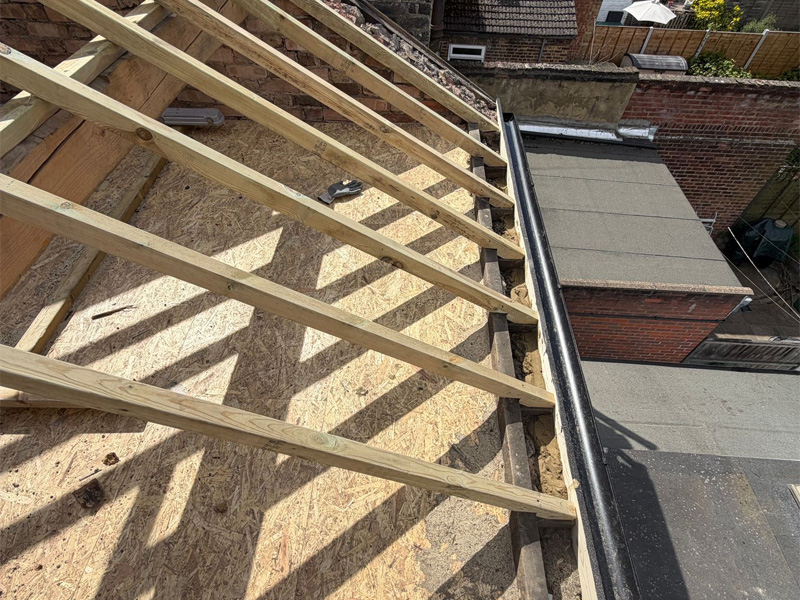
A site visit is arranged at a convenient time, with access gained safely to inspect the gutter runs and fall direction in full. Where the issue is out of sight from the ground, photographic evidence is supplied so the diagnosis can be reviewed visually.
02
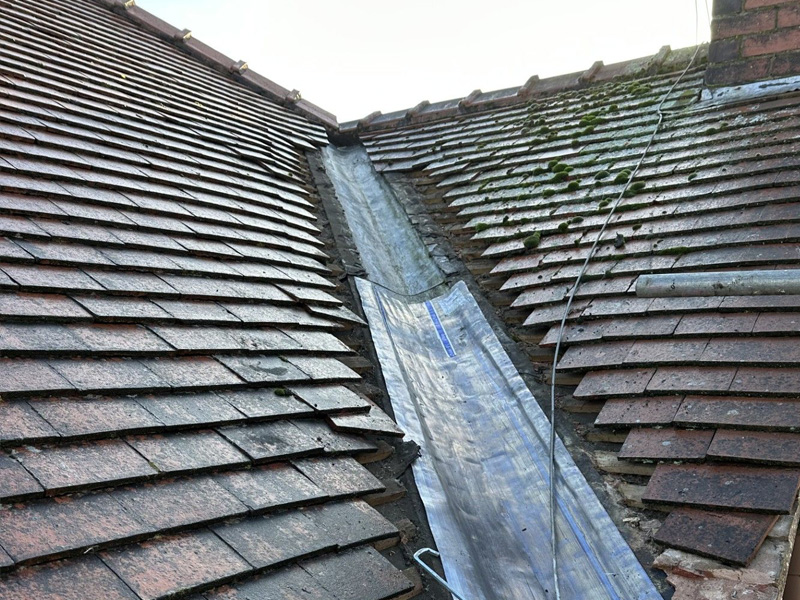
A written quotation is issued covering profile and colour selected, brackets, downpipes, any associated fascia work, scaffold or tower access where required, and labour. Free, with no obligation to proceed.
03
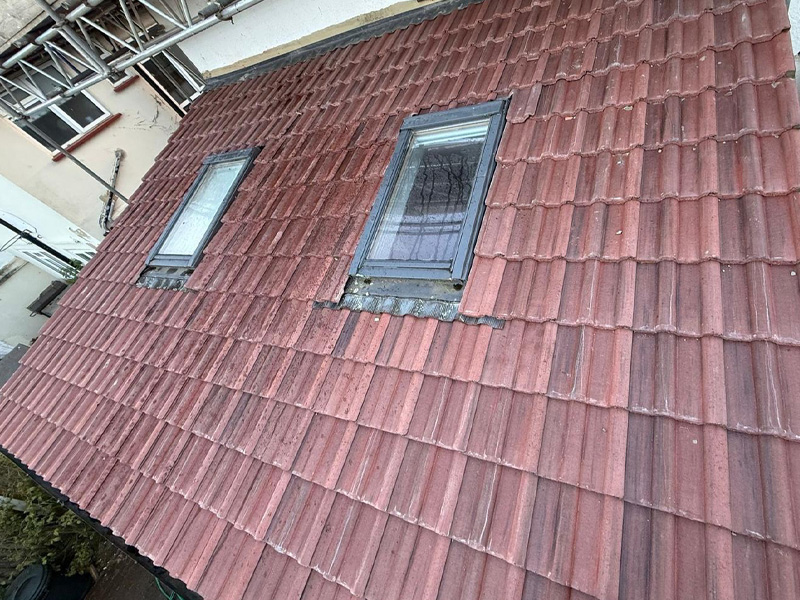
Works are scheduled at a time that suits the client. Most domestic gutter replacements are completed in one to two working days. Existing materials are removed responsibly, and the new system is fitted to the correct fall.
04
A final inspection is carried out with the client, with discharge of the system tested where practical. Workmanship is guaranteed in writing, and manufacturer warranties on the UPVC system apply in addition.
“Gutters had been sagging and overflowing onto the bay window for two winters. FNB replaced the lot in anthracite grey, set to a proper fall, with new downpipes and brackets every metre. Done in a day and a half. No mess left.”
S Patel
Walthamstow, E17
“Spotted a leak at one joint and was bracing myself for a full replacement. They came out, replaced just the union rubbers on two sections and rebedded the joint — honest, properly priced, no upsell.”
M Olaniyan
Leytonstone, E11
UPVC gutter repairs and replacements are carried out across East London, North London and Essex — including Waltham Forest, Hackney, Haringey, Redbridge, Newham, Islington, Enfield and the surrounding boroughs, alongside postcodes throughout the E, N, IG and RM regions.
Answers to common questions about UPVC gutter repairs, replacement, profiles, downpipes and our process.
Most domestic UPVC gutter replacements on a standard semi-detached or terraced property are completed in one to two working days, including removal and responsible disposal of the existing system, fitting the new runs to the correct fall, and testing discharge to the downpipes on completion.
Yes. Failed seals at union brackets are the single most common cause of overflow on otherwise functional UPVC guttering. Replacement of the union rubbers and rebedding of the joint typically resolves it without renewing the surrounding runs, provided the rest of the system is sound and at the correct fall.
The most common UPVC profiles are half-round, square, ogee and deep-flow, available as standard in white, black, brown and anthracite grey. Half-round suits most standard domestic roofs. Deep-flow is specified where there is unusually heavy water shed — typically larger roof areas or steeper pitches. We’ll match the original profile where appearance matters along a terraced row.
Yes — strip-out and renewal of cast iron or asbestos guttering with modern UPVC is a common job, particularly on Victorian and Edwardian terraces where the original cast iron has reached the end of its service life. Asbestos guttering is removed under appropriate handling procedures and disposed of through a licensed waste route.
Sagging is usually caused by inadequate or substandard brackets, poor original fall, or both. Over time the runs pull away from the fascia between fixings and joints separate. Realignment involves removing the affected runs, resetting brackets at correct centres and a consistent gradient, and refitting the system so it discharges cleanly to the downpipes.
Yes — replacement downpipes are sized appropriately for the discharge, properly bracketed to the wall, and the connection at ground level into either an existing gulley or a soakaway is checked and reinstated as part of the works. We don’t leave a downpipe discharging into thin air at the bottom.
Yes — site visits and written quotations are free, with no obligation to proceed. Most gutter visits can be scheduled within a few working days of initial contact, and quotations are typically issued within a further day or two of attending site.
Workmanship is guaranteed in writing on completion. Manufacturer warranties on the UPVC system itself — which vary by supplier but are typically ten years or more on the plastic — apply in addition.
Free site visit, free written quotation, no obligation to proceed. Most gutter projects can be priced within a few working days of initial contact.

© FNB Roofing & Building 2026. All Rights Reserved.
another NewMediaFarm production
